
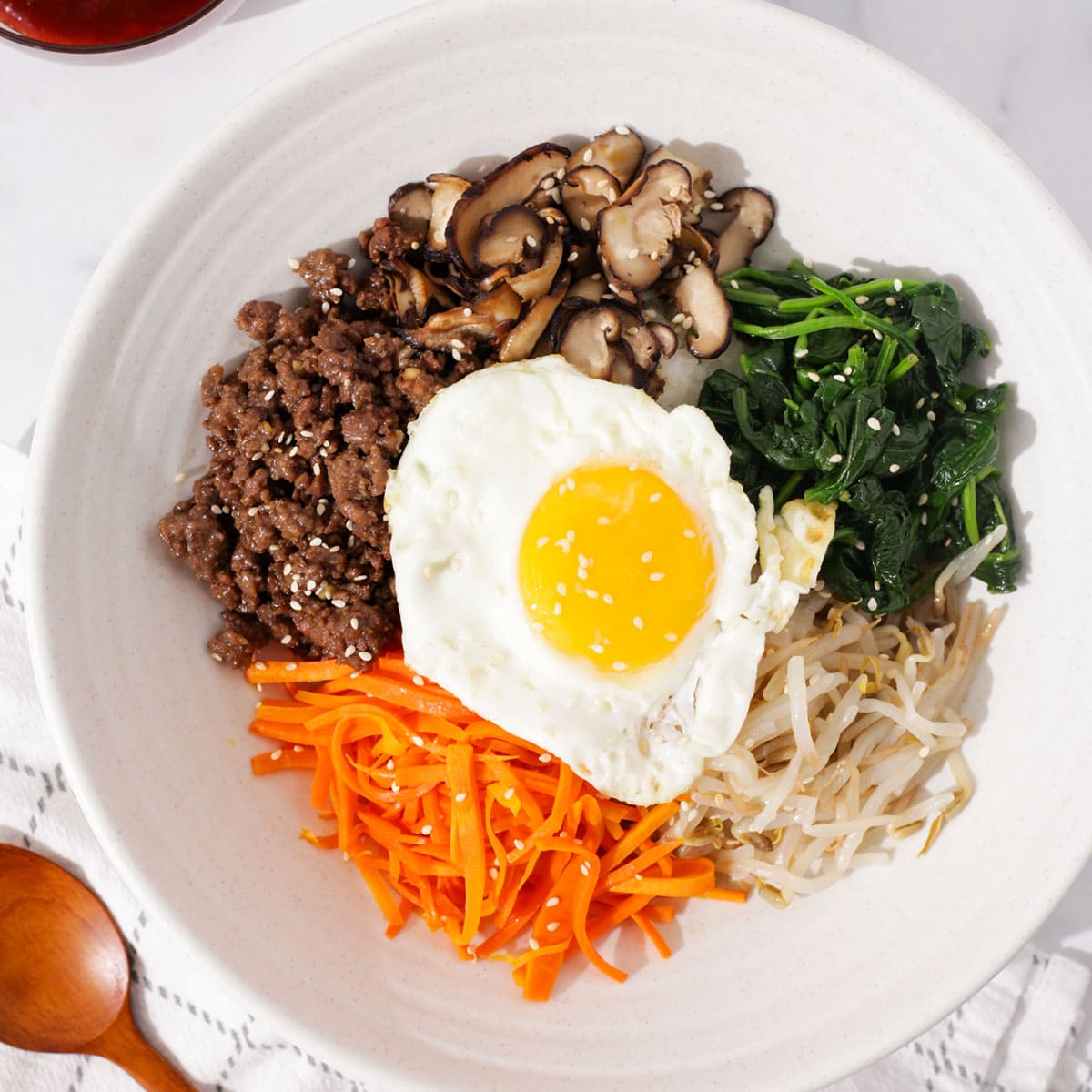
Bibimbap is a beloved Korean dish that offers a delightful combination of flavors and textures. This easy version, featuring ground beef, simplifies the traditional preparation without sacrificing taste. With its vibrant vegetables, tasty sauce, and a fried egg on top, it’s a feast for both the eyes and palate.
You can customize your bibimbap according to your personal preferences or whatever vegetables you have on hand. This recipe is quick to prepare, making it ideal for busy weeknights. In under an hour, you’ll have a delicious and satisfying meal.
Originating from Korean cuisine, bibimbap translates to “mixed rice,” perfectly describing the dish. It’s often served warm, and the mix of ingredients creates a harmony of flavors just before you dig in. This dish is not only great for family dinners, but it also works well for meal prep!
Why You’ll Love This Recipe
This easy bibimbap recipe is quick to make, customizable, and incredibly tasty. The use of ground beef eliminates the need for marinating, making it a perfect choice for weeknight meals. The savory sauce enhances the sautéed vegetables and the richness of the fried egg, resulting in a satisfying bowl that your family will adore.
It’s also a fantastic way to use up leftover vegetables, giving you the freedom to get creative and experiment while keeping the essence of this classic Korean dish.
Ingredients and Substitutions
To prepare this easy bibimbap, gather the following ingredients:
- Gochujang: This Korean red chili paste adds signature spiciness and flavor. If you prefer a milder taste, start with less and adjust to your liking.
- Ground Beef: Using 80/20 ground beef offers the best balance of flavor and juiciness. Alternatively, ground turkey or chicken can be used for a leaner option.
- Vegetables: The recipe includes mung bean sprouts, baby spinach, carrots, and mushrooms. Feel free to swap these for seasonal or leftover vegetables like zucchini or bell peppers.
- Eggs: Each bowl is topped with fried eggs, but you can use scrambled eggs or omit them for a vegetarian version.
- Sesame Oil: Toasted sesame oil provides a nutty aroma that elevates the overall flavor. Regular sesame oil is an option but may not offer the same depth.
- Rice: Traditionally, short or medium-grain white rice is used, but you can opt for brown rice or cauliflower rice for healthier choices.
How to Make Easy Bibimbap
Follow these straightforward steps to create your delicious bibimbap:
- Prepare the Bibimbap Sauce: In a small bowl, combine gochujang, honey, minced garlic, and sesame oil until mixed well. Set this aside to amplify the flavors.
- Blanch the Vegetables: In a pot of boiling water, blanch the mung bean sprouts for 2 to 3 minutes until they become translucent. Remove, cool in cold water, squeeze out excess water, season with salt and sesame oil, and set aside. Repeat with spinach, cooking for about 30 seconds until wilted.
- Cook the Ground Beef: In a medium pan over medium heat, cook the ground beef until browned. Drain excess fat, add the prepared sauce, and let it simmer for about 5 minutes to enhance the flavors.
- Cook the Mushrooms and Carrots: In the same pan, sauté sliced mushrooms and julienned carrots with a bit of oil, seasoning each with salt and adding toasted sesame oil before removing from the heat.
- Fry the Eggs: In the same pan, add a bit more oil and fry eggs sunny-side up until the whites are set and yolks remain runny.
- Assemble the Bowls: In bowls, layer the cooked rice, arranging the marinated beef, sautéed mushrooms, carrots, blanched spinach, and bean sprouts on top, finishing with a fried egg in the center. Garnish with green onions and sesame seeds if desired.
- Finish with the Sauce: Drizzle the bibimbap sauce over each bowl before serving. Mix everything together to enjoy!
Expert Tips for Success
- Avoid overcooking the vegetables; they should be tender yet retain some crunch.
- Adjust the spiciness of the gochujang sauce according to your taste preference, adding it gradually.
- Make sure to squeeze out excess water from the vegetables after blanching to prevent a watery bowl.
- Consider preparing components a day in advance for quicker assembly; store in airtight containers in the fridge.
Variations
Get creative with your bibimbap by swapping or adding different ingredients. Here are some variations to try:
- Vegetarian Bibimbap: Replace the ground beef with tofu or tempeh, using similar seasonings for flavor.
- Spicy Option: Add sliced jalapeños or use a spicier version of gochujang if you prefer extra heat.
- Seafood Bibimbap: Incorporate cooked shrimp or fish in place of beef for a lighter alternative.
- Extra Crunch: Top with crushed nuts or seeds for added texture and flavor.
Serving Suggestions
Enhance your bibimbap with traditional Korean sides. Kimchi, whether fermented or fresh, adds a spicy and refreshing element. Consider pairing it with cucumber salad for a cool contrast. Light soju or Korean iced tea are excellent beverage options to cleanse the palate.
Storage, Freezing, and Reheating
If you have leftovers (which is uncommon!), store them in an airtight container in the refrigerator for up to three days. For the best flavor, keep components separate if possible. Reheat rice in the microwave, and warm other ingredients in a pan or microwave until heated through. Freezing is not recommended, as the texture may become mushy upon thawing.
Frequently Asked Questions
Can I use other types of rice for bibimbap?
Yes, while traditional bibimbap typically employs short or medium-grain white rice, brown rice or cauliflower rice are also excellent alternatives for a healthier option.
What’s the best way to serve bibimbap?
Bibimbap is best served warm. Allowing everyone to mix their bowl makes for a fun and interactive dining experience.
Is bibimbap a healthy meal?
This dish can be very healthy, particularly if it is packed with various vegetables, providing a balanced meal with proteins, carbs, and fiber.
Can I make bibimbap in advance?
Many components can be prepped ahead of time and stored in the refrigerator. The rice can be cooked and cooled, and the vegetables can be blanched and seasoned, ready for quick assembly later.
How spicy is bibimbap?
The spiciness in bibimbap largely depends on how much gochujang you use. You can easily control the spice level by adjusting the quantity to fit your taste.
Easy Bibimbap (Korean Mixed Rice Bowl)
Ingredients
- ¼ cup gochujang (Korean red chili paste)
- 2 tablespoons honey (or sugar)
- 1 teaspoon garlic (minced (about 1 clove))
- 1 teaspoon toasted sesame oil
- 8 ounces mung bean sprouts (or soy bean sprouts)
- ½ teaspoon salt
- 1 tablespoon toasted sesame oil
- 10 ounces baby spinach
- ¼ teaspoon salt
- ½ Tablespoon toasted sesame oil
- 1 large carrot (peeled and cut into juliennes/thin matchsticks)
- 2 teaspoon toasted sesame oil
- 1 teaspoon salt
- 8 ounces mushrooms (sliced (we used shiitake but use your preferred ones))
- ¼ teaspoon salt
- 1 teaspoon toasted sesame oil
- 1 pound ground beef ((we use 80/20 ground beef))
- ¼ cup soy sauce
- ¼ cup honey
- 1 tablespoon garlic (minced (about 3 cloves))
- 2 teaspoon toasted sesame oil
- 3 cups cooked white rice (more or less to your preference)
- 3 large eggs
- Green onion (thinly sliced (optional for garnish))
- Toasted sesame seed (optional for garnish)
Instructions
- In a bowl, mix together the gochujang, honey, minced garlic, and sesame oil until well combined. Set aside until needed.
- Bring a pot of water to boil.
- Bean sprout: Place the bean sprouts in pot of boiling water for 2 to 3 minutes or until they turn translucent. Use a strainer to fish out the bean sprouts and rinse with cold water until completely cooled. Firmly squeeze the bean sprouts with your hands to remove excess water. Season with salt and sesame oil, then set aside until needed.
- Spinach: In the same pot of boiling water, add the spinach and cook for about 30 seconds or until the spinach is wilted and turns bright green. Drain and rinse the spinach with cold water until completely cooled. Firmly squeeze the spinach with your hands to remove excess water. Season with salt and sesame oil, then set aside until needed.
- Ground beef: Make the sauce by mixing together soy sauce, honey, minced garlic, and sesame oil. In a saucepan/medium pan over medium heat, add the ground beef and cook until no longer pink. Drain the fat if necessary. Then, add the prepared sauce and reduce the heat to keep it at a simmer. Let the ground beef simmer for about 5 minutes or until the sauce is a little more than half reduced. Stir occasionally. Set the ground beef aside and keep warm.
- Mushroom: In a pan over medium high heat, add a couple tablespoons of oil. Once hot, add the mushrooms and season with salt. Sauté until the mushrooms are cooked. Finish with the sesame oil. Remove from the pan and set aside.
- Carrot: In the same pan over medium high heat, add a couple tablespoons of oil. Once hot, add the carrots and season with salt. Cook until just tender and finish with the sesame oil. Remove from the pan and set aside until needed.
- Fry the egg(s): Using the same pan, add some oil and heat it on medium high heat until the oil just starts to smoke. Add the egg(s) and fry until the egg whites are set. Remove from the pan. *If needed, wipe the pan with paper towel to get rid of any bits of vegetables leftover. Fry as many eggs as the number of servings you're making. Fried eggs are best served immediately. If you feel comfortable frying multiple eggs in one pan, feel free to do so.*
- Prepare as many bowls as you are serving. In each bowl, add your desired amount of rice, then arrange the toppings (bean sprouts, spinach, carrots, mushrooms, ground beef) around the rice. Place the fried egg in the center on top of the rice and garnish with the green onion and sesame oil if you wish.
- Add your preferred amount of bibimbap sauce to each bowl. Then, mix everything up to enjoy.
