
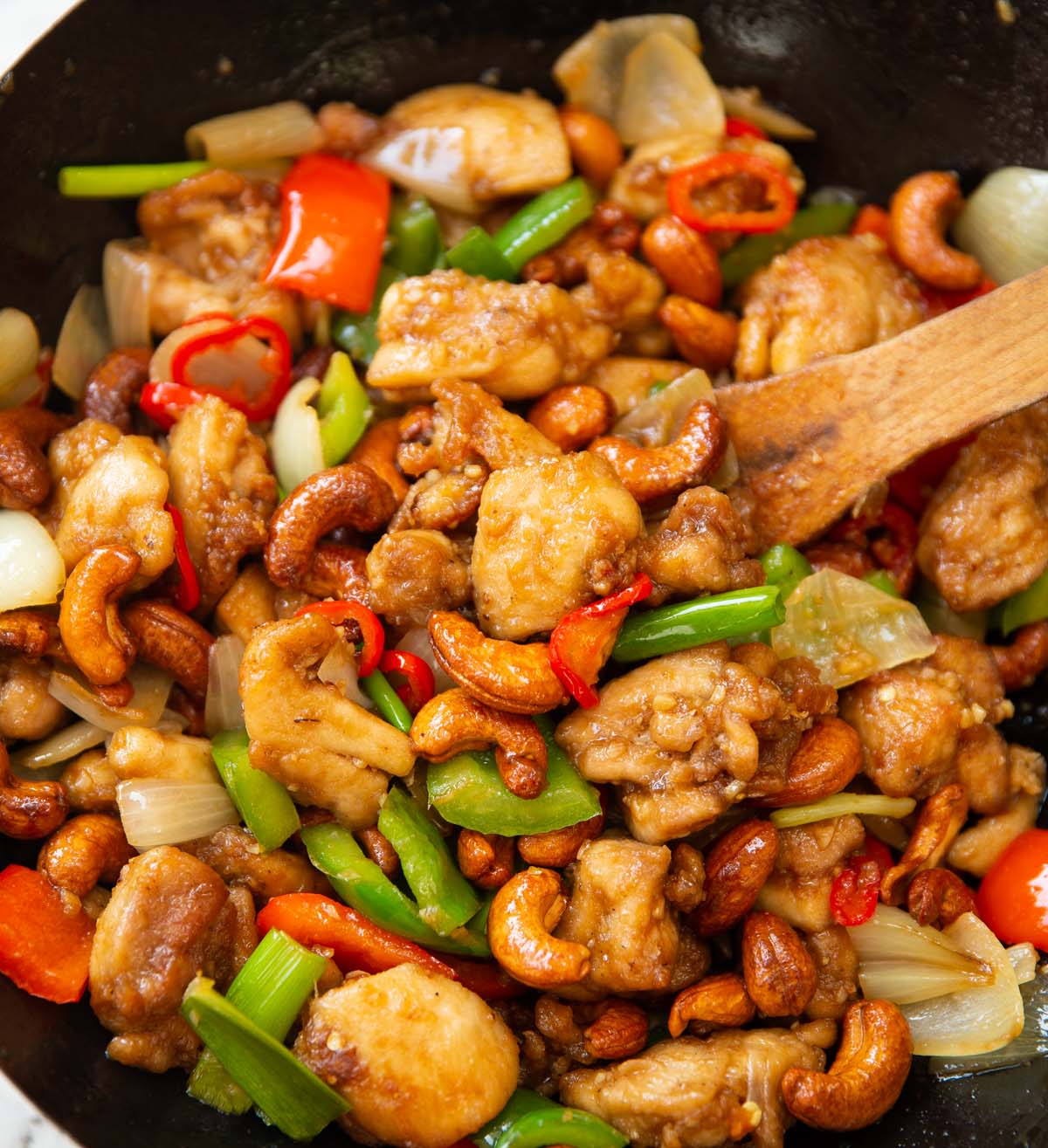
Thai cuisine is renowned for its vibrant flavors and fresh ingredients, and this Thai Cashew Chicken recipe is no exception. Enveloped in a luscious sauce and packed with savory cashews, it brings the perfect balance of textures and tastes to your dinner table. Not only is this dish incredibly delicious, but it’s also surprisingly straightforward to prepare, making it ideal for weeknight meals.
If you’re a fan of quick yet satisfying dishes, this Thai Cashew Chicken will quickly become a favorite. Featuring tender chicken thigh pieces, crisp vegetables, and buttery cashew nuts, this dish is sure to impress your family or guests. Plus, with only 35 minutes from prep to plate, you’ll be enjoying a delicious home-cooked meal in no time.
Why You’ll Love This Recipe
This Thai Cashew Chicken comes together quickly while delivering fantastic flavor. The combination of chicken cooked to golden perfection, sautéed vegetables, and the crunch of toasted cashews creates a delightful contrast. This dish is not only hearty and satisfying but also versatile, allowing you to adjust the spice level to cater to your palate.
The glossy sauce expertly binds all the ingredients, resulting in an irresistible coating that clings to each piece. Serve it over rice or noodles, and you have a complete meal that’s sure to please!
Ingredients and Substitutions
To recreate this flavorful Thai Cashew Chicken, gather the following ingredients:
- Chicken: 600g (about 1.3 lbs) of boneless, skinless chicken thighs, diced into bite-sized pieces. Chicken thighs are preferred for their tenderness and flavor. Chicken breast can be used as a substitute, but it may cook faster and could dry out.
- White Pepper: 1 tsp to season the chicken, adding a subtle kick.
- Soy Sauce: 1 tbsp + 2 tsp for marinating the chicken and another tablespoon for the sauce, enhancing the overall flavor.
- Plain Flour: 50g (about 1/3 cup) to coat the chicken, providing a crispy texture.
- Vegetable Oil: 120ml (1/2 cup), used for frying the chicken and cashews.
- Cashew Nuts: 200g (about 7 oz); use unsalted cashews to control the sodium level.
- Onions: 2 medium white onions, diced. Their sweetness balances the spices.
- Bell Peppers: 2 medium peppers (1 red, 1 green) for color and crunch, diced similarly to the onion.
- Garlic: 4 cloves, finely diced; essential for flavor.
- Red Chillies: 2, deseeded if you prefer less heat.
- Spring Onions: 3, separated into white and green parts, roughly chopped.
- Sugar: 1 1/2 tbsp granulated sugar to balance the flavors.
- Oyster Sauce: 1 tbsp to enhance the savory depth of the dish.
For serving, have cooked rice or noodles ready to accompany this dish.
How to Make Thai Cashew Chicken
Follow these steps to create your flavorful Thai Cashew Chicken:
- In a large mixing bowl, combine the chicken with white pepper and 2 teaspoons of soy sauce. Mix in the flour until the chicken is well coated. This will create a lovely crust when frying.
- Heat oil in a wok or large pan over medium-high heat. Once hot, add the cashews and fry until they turn golden brown, which should only take a few minutes. Be attentive, as they can burn quickly. Remove and set aside.
- In two batches, shake off excess flour from the chicken before adding it to the hot oil. Fry until golden and crispy, about 5 minutes per batch. Remove and set aside, leaving just a couple of tablespoons of oil in the pan.
- Add diced peppers, onions, and garlic to the remaining oil in the pan, sautéing for a couple of minutes until slightly softened. Then, add chilies and the white parts of the spring onions, cooking for an additional minute.
- Return the fried chicken to the pan. Stir in the sugar, oyster sauce, and the remaining tablespoon of soy sauce, ensuring everything is well mixed. Add the fried cashews and the green parts of the spring onions last. The sugar should dissolve, creating a glossy coating over the ingredients.
- Serve immediately over rice or noodles for a delightful meal.
Expert Tips for Success
For a perfect Thai Cashew Chicken, consider these expert tips:
- Monitor the cashews while frying; they can quickly turn from perfect to burnt.
- Fry the chicken in batches to avoid overcrowding the pan, ensuring a crispy texture.
- Prep all ingredients before you start cooking; this dish cooks quickly once you begin.
- Adjust the heat level by adding more or fewer chillies based on your preference.
Variations
This recipe can easily be adapted to suit your tastes or dietary restrictions:
- Protein Choices: Substitute chicken with shrimp, tofu, or beef.
- Vegetables: Incorporate additional vegetables such as broccoli, snap peas, or carrots for extra crunch and nutrients.
- Gluten-Free: Use tamari instead of soy sauce and arrowroot flour instead of plain flour for a gluten-free version.
Serving Suggestions
Thai Cashew Chicken is excellent when served with:
- Cooked Rice: Jasmine rice or basmati rice pairs wonderfully.
- Noodles: Alternatively, enjoy it atop rice noodles or udon.
- Fresh Salad: A side of cucumber or Asian slaw adds a refreshing contrast.
Storage, Freezing, and Reheating
For storing leftovers:
- Refrigeration: Place cooled Thai Cashew Chicken in an airtight container; it can be stored in the fridge for up to 3 days.
- Freezing: For longer storage, freeze the dish; it’s best consumed within 2 months. Thaw in the refrigerator overnight before reheating.
- Reheating: Reheat in a pan over low heat, adding a splash of water or oil to restore moisture. Stir occasionally.
Frequently Asked Questions
Can I use chicken breast instead of thighs?
Yes, chicken breast can be used, but keep in mind that it tends to cook faster and may not stay as moist compared to thighs.
What can I substitute for oyster sauce?
If you don’t have oyster sauce, soy sauce mixed with a bit of sugar can serve as a suitable substitute, although it won’t offer the same richness.
How spicy is this dish?
The spice level can be adjusted by removing the seeds from the red chillies or using fewer chillies altogether to make it suitable for those who prefer milder flavors.
Can I make this dish in advance?
While it’s best enjoyed fresh, you can prepare the chicken and vegetables ahead of time and then sauté them just before serving.
What type of cashews should I use?
Use unsalted cashew nuts for the best flavor and to control the saltiness of the dish.
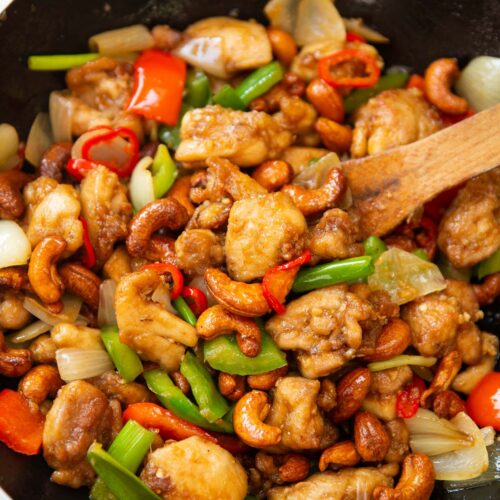
Thai Cashew Chicken
Ingredients
- 600g boneless skinless Chicken Thighs diced into bite-sized pieces (see notes)
- 1 tsp White Pepper
- 1 tbsp + 2 tsp Light Soy Sauce
- 50g 1/3 cup Plain Flour
- 120ml 1/2 cup Veg Oil (for frying)
- 200g 7oz Unsalted Cashew Nuts
- 2 medium White Onions halved then diced into quarters (pull layers apart)
- 2 medium Peppers I use 1 red 1 green (diced into pieces to similar size as the onion)
- 4 cloves Garlic finely diced
- 2 Red Chillies deseeded if you want to reduce spice (see notes)
- 3 Spring Onion separated into firm white part and green part, then chopped into 2.5cm/1" pieces
- 1 1/2 tbsp Granulated Sugar
- 1 tbsp Oyster Sauce
- Cooked Rice for serving
Instructions
- In a large mixing bowl, combine the chicken with the white pepper and 2 teaspoons of soy sauce. Mix in the flour until the chicken is fully coated.
- Heat the oil in a wok or large, deep frying pan over medium-high heat for a few minutes. Once hot, add the cashews and fry until deep golden. Keep an eye on them, as they’ll burn quickly. Remove with a slotted spoon and place in a bowl to one side, leaving the oil behind.
- Working in two batches, shake off any excess flour from the chicken and add it to the oil. Fry until golden and crisp on the outside and piping hot right through the centre (about 5 minutes per batch). Remove each batch with a slotted spoon and set aside. Discard all but around 2 tablespoons of oil (just eyeball it).
- Add the peppers, onions and garlic and fry for a couple of minutes, then add the chilli and firm white parts of the spring onions and fry for a minute longer. Stir in the chicken, then stir in the sugar, oyster sauce and remaining 1 tablespoon of soy sauce. Toss in the cashews and the rest of the spring onion. The sugar should have fully dissolved and the sauce should have a glossy texture that just lightly coats everything. Serve and enjoy!
