
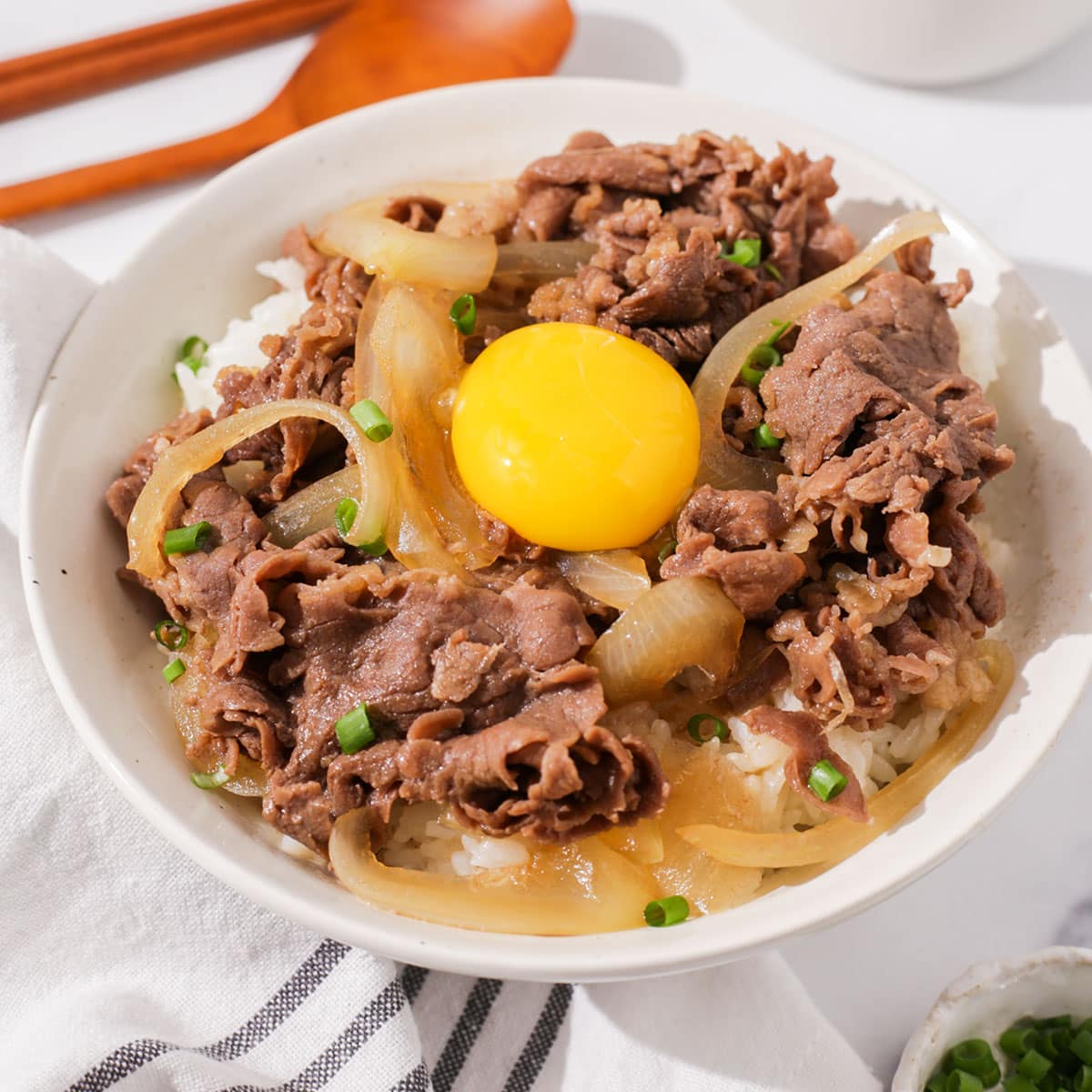
Gyudon, a delightful Japanese beef bowl, is the epitome of comfort food that beautifully marries sweet and savory flavors. It’s an incredibly quick dish to prepare, perfect for those busy weeknights when you crave something satisfying without spending hours in the kitchen. In just about 10 minutes, you can create a meal that delights your taste buds and fills your belly. Imagine tender beef simmered in a luscious sauce, served over steaming hot rice, adorned with a luscious egg yolk. This dish not only satisfies your hunger but also warms your soul.
The simplicity of Gyudon is part of its charm. With a few key ingredients that are commonly found in most Asian kitchens, you can whip up a delicious lunch or dinner that feels like a comforting embrace. Whether you’re new to Japanese cuisine or a seasoned fan, Gyudon is sure to make its way into your regular rotation of meals.
Why You’ll Love This Recipe
One of the standout features of Gyudon is its ability to come together in mere minutes. The recipe requires minimal preparation and only a handful of ingredients, yet the flavors are rich and satisfying. The combination of tender beef, sweet onions, and umami-rich sauce creates a fulfilling dish that pairs wonderfully with the fluffy rice. Plus, the optional toppings, like pickled ginger and green onions, add an extra layer of flavor and freshness.
Ingredients and Substitutions
To make Gyudon, you will need the following ingredients:
- Thinly sliced beef (ribeye or chuck eye): This adds the essential richness to the dish. You can look for beef labeled for hot pot or shabu-shabu in your local Asian market for convenience.
- Onion: A half large yellow onion, thinly sliced, adds sweetness and flavor that balances the savory sauce.
- Mirin: A sweet rice wine that provides depth to the sauce. If you want a non-alcoholic option, consider using a non-alcoholic mirin or a mixture of sake and sugar (3 parts sake to 1 part sugar).
- Soy Sauce: Low-sodium soy sauce is preferred, as it doesn’t overpower the dish. Regular soy sauce can also be used if you adjust the quantity slightly.
- Granulated Sugar: Just a small tablespoon to round out the flavors and complements the savory notes of the sauce.
- Hondashi Powder: This Japanese soup stock, made from bonito, adds umami. It can be substituted with dashi broth for more depth if you have it handy.
- Cooked White Rice: Two cups of hot rice are essential for serving, providing a base that soaks up the delicious sauce.
- Egg Yolks or Onsen Eggs (Optional): This adds a creamy richness to the dish. If desired, you can skip the egg if you’re avoiding raw eggs.
- Pickled Red Ginger and Green Onions (Optional): These toppings add freshness and a palate-cleansing zing.
How to Make Gyudon
- Start by preparing the sauce. In a tall-sided saucepan, combine the water, mirin, soy sauce, granulated sugar, and hondashi powder. Stir well to combine. Add the sliced onions and cover the pan.
- Bring the mixture to a simmer over medium heat. This shouldn’t take long, so keep an eye on it to avoid scorching the ingredients.
- Once the sauce is simmering gently, add the thinly sliced beef on top of the onions, spreading it out as evenly as possible.
- Allow the beef to cook just until it turns from pink to a nice brown, about 2-3 minutes. If desired, skim off any impurities that form on the surface for a cleaner presentation.
- Remove the pan from heat, and portion the beef and onion onto two bowls of rice. Drizzle with the savory sauce.
- Serve your Gyudon topped with a raw egg yolk or an onsen egg, and garnish with pickled ginger and sliced green onions for added flavor and texture.
Expert Tips for Success
- Use Good Quality Beef: Opt for marbled cuts like ribeye to ensure tenderness and flavor.
- Don’t Overcook the Beef: Keep an eye on cooking time to prevent the beef from becoming tough. Cook it just until no longer pink.
- Preparation is Key: Have all your ingredients ready to go before you start cooking, as the procedure moves quickly.
- Adjust the Pastry: Feel free to tweak the sauce ingredients according to your taste preferences; you can balance sweetness and saltiness to your liking.
Variations
While Gyudon is delicious as is, there are several ways to customize it:
- Gyujidon: For a creamier version, add a beaten egg over the beef just as it finishes cooking, allowing it to set slightly before serving.
- Spicy Gyudon: Add a touch of chili paste or flakes if you like a little kick in your dish.
- Vegetarian Gyudon: Substitute beef with tofu or mushrooms and use vegetable broth in place of the beef stock.
Serving Suggestions
Gyudon is wonderful on its own, but you can elevate the meal experience with the following sides:
- Miso Soup: A warm bowl of miso soup complements the meal beautifully.
- Salad: A light cucumber salad can provide a refreshing contrast.
- Kimchi: For those who enjoy it, a small serving of kimchi can also enhance the meal with its tangy flavors.
Storage, Freezing, and Reheating
To store any leftover Gyudon, allow it to cool fully, and transfer it to an airtight container. Refrigerate for up to 3-4 days or freeze for closer to a month. It’s best to store the beef separately from the rice to avoid sogginess. When ready to eat, simply reheat in the microwave or bring to a gentle simmer on the stovetop until heated through.
Frequently Asked Questions
What kind of beef is best for Gyudon?
Thinly sliced ribeye is ideal due to its marbling, which keeps the meat tender and flavorful. Chuck eye is an acceptable alternative if ribeye is unavailable.
Can I use dashi instead of hondashi powder?
Yes, using dashi broth in place of hondashi powder can enhance the umami flavor in the Gyudon and provide a more authentic taste.
Is Gyudon gluten-free?
Traditional Gyudon contains soy sauce, which may not be gluten-free. Opt for gluten-free soy sauce or a tamari alternative to make this dish suitable for those with gluten sensitivities.
How do I make Gyudon less salty?
You can balance the saltiness by adding a little more sugar or by using low-sodium soy sauce. Increasing the amount of rice may also help absorb some of the saltiness.
Can I make this dish vegetarian?
Absolutely! Substitute the beef with firm tofu or a mix of vegetables like shiitake mushrooms and bell peppers, and use vegetable broth instead of beef broth for flavor.
Gyudon (Japanese Beef Bowl)
Ingredients
- ½ pound thinly sliced beef ribeye or chuck eye
- ½ large yellow onion thinly sliced
- ½ cup water
- 4 tablespoons mirin
- 3 tablespoons soy sauce (light sodium)
- 1 tablespoon granulated sugar
- ¼ teaspoon hondashi powder
- 2 cups cooked white rice (hot, more or less to your preference)
- 2 large egg yolk (or onsen eggs, optional)
- Pickled red ginger (beni shoga or kizami shoga, optional)
- Green onion (thinly sliced, optional)
Instructions
- In a saucepan or any pan with tall sides, add all the ingredients for the sauce (water, mirin, soy sauce, sugar, and hondashi powder). Give everything a stir and add the sliced yellow onions.
- Cover the pan and bring everything to a simmer over medium heat.
- Once the sauce is simmering, add the thinly sliced beef on top of the onions. Spread the beef as evenly as possible.
- Let the beef cook until no longer pink and if you prefer, skim off the scum. Remove from heat.
- Portion the beef and onion amongst two bowls of rice and pour your desired amount of the sauce over everything.
- Serve the gyudon with a raw egg yolk or an onsen tamago (Japanese hot spring egg) and garnish with some pickled red ginger and sliced green onions. Enjoy!
